Tuesday, February 7, 2012
Yellow Mountain Maofeng Cha
Produced in Huangshan City, Anhui Province, Yellow Mountain Maofeng Tea is the nonesuch among all types of green tea in China. The raw material is picked in Yellow Mountain and the newly made tea leaves are covered with coats of pekoe, hereby the name “Yellow Mountain Maofeng Tea”. The tea trees are mainly distributed around the Peachblossom Peak (Taohuafeng) which is featured by high altitude, dense forest, short daytime, thick mist and other predominant natural conditions. Top quality tea leaves are obtained by virtue of the moistening of cloud and mist as well as nonexistence of extreme weather.
Fresh Yellow Mountain Maofeng Tea is usually fabricated during the Qingming Festival by selectively picking tea shoots and then getting them steamed, rolled and baked in the same day. This processing method can be traced back to the Qing Dynasty and has bearing on the Cloud-mist Tea. There are numerous renowned springs on the Yellow Mountain which are ideal to brew Yellow Mountain Maofeng Tea for the purpose of obtaining top taste.
Yellow Mountain Maofeng Tea is featured by slightly coiled leaves, slender starwort-like shape, yellowish green, unveiled silver pekoe, and golden jannum. After brewing it in boiled water, the steam will arise and linger above the yellowish clear green liquor. The liquor is sweetish mellow and emits orchid fragrance, with the leaves presenting yellowish green and providing lingering charm.
Other than Maofeng tea, Yellow Mountain also produces a wide range of famous tea such as “Tunlv” of Xiuning County, “Houkui” of Taiping County and “Laozhu Dafang” of Shexian County. They are all endowed with unique features and famous far and wide.
By Explore Cultural China
Monday, February 6, 2012
Cup Stand
Period: Qing dynasty (1644–1911), Kangxi period (1662–1722)
Culture: China
Medium: Cloisonné enamel on copper
Dimensions: H. 2 3/4 in. (7 cm); Diam. 6 3/4 in. (17.1 cm)
Classification: Cloisonné
Credit Line: Gift of Edward G. Kennedy, 1929 Accession Number: 29.110.5
At:
The Metropolitan Museum of Art
Sunday, February 5, 2012
Ming Dynasty Lacquer Tea Bowl
Tea-Bowl Stand with Phoenixes
Period: Ming dynasty (1368–1644), Yongle period (1403–24)
Culture: China
Medium: Carved red lacquer
Dimensions: H. 3 in. (7.6 cm); Diam. 6 1/2 in. (16.5 cm); Diam. of rim 3 3/4 in. (9.5 cm); Diam. of foot 3 1/4 in. (8.3 cm)
Classification: Lacquer
Credit Line: Promised Gift of Florence and Herbert Irving
Accession Number: L.1996.47.18
Description:
Often associated with empresses, phoenixes illustrate the addition of imperial imagery to carved lacquers made in the closing years of the reign of the Yongle emperor.
The sharpness in the outlines and other decoration is also typical of works produced at court.
Lacquer stands of this type were used to hold tea bowls, usually those of green or blue-and-white porcelain.
The color contrast between stand and bowl would therefore have been quite dramatic.
At:
Metropolitan Museum of Art
Saturday, February 4, 2012
Recipe: Pork with tea eggs
Ingredients:
2 Tablespoons corn oil
1 pound boneless pork shoulder cut into one inch cubes
12 dry shiitake mushrooms, soaked in warm water for half an hour
1/2 cup sa cha sauce or hoisin sauce mixed with one teaspoon chili sauce
2 Tablespoons rock sugar
12 tea eggs
Preparation:
1. Heat oil in a wok or fry pan and stir-fry the pork for two minutes.
2, Remove stems from the mushrooms and quarter them. Then add them to the pork and stir-fry another minute.
3. Add all the rest of the ingredients and stir-fry for another two minutes. Remove pork, mushrooms, and eggs from the sacha sauce liquid, cut the eggs in halves or quarters, and serve hot or warm.
2 Tablespoons corn oil
1 pound boneless pork shoulder cut into one inch cubes
12 dry shiitake mushrooms, soaked in warm water for half an hour
1/2 cup sa cha sauce or hoisin sauce mixed with one teaspoon chili sauce
2 Tablespoons rock sugar
12 tea eggs
Preparation:
1. Heat oil in a wok or fry pan and stir-fry the pork for two minutes.
2, Remove stems from the mushrooms and quarter them. Then add them to the pork and stir-fry another minute.
3. Add all the rest of the ingredients and stir-fry for another two minutes. Remove pork, mushrooms, and eggs from the sacha sauce liquid, cut the eggs in halves or quarters, and serve hot or warm.
By Explore Cultural China
Friday, February 3, 2012
Houroku - Ceramic Roasting Pot
![]() |
| 焙烙 houroku baking pan; parching pan |
This is a Houroku - a ceramic roasting pot.
According to Keiko-san of But Tea blog http://www.blogger.com/profile/07772813824069306876, the Houroku roaster has been in use since the early Meiji period (September 1868 - July 1912).
In the Taisho period (July 1912 - December 1926) the Houroku was generally used as a cooking implement - roasting everything from tea leaves to nuts and seeds. Roasters are a great way to perk up old tea leaves. Roast them in the Houroku then brew the tea leaves.
This Houroku is from Shizuoka, Japan can be purchased from a store called http://ochaukeya.com/houroku. They do not mail overseas. You may have to contact the store in Japan and see what their options might be.
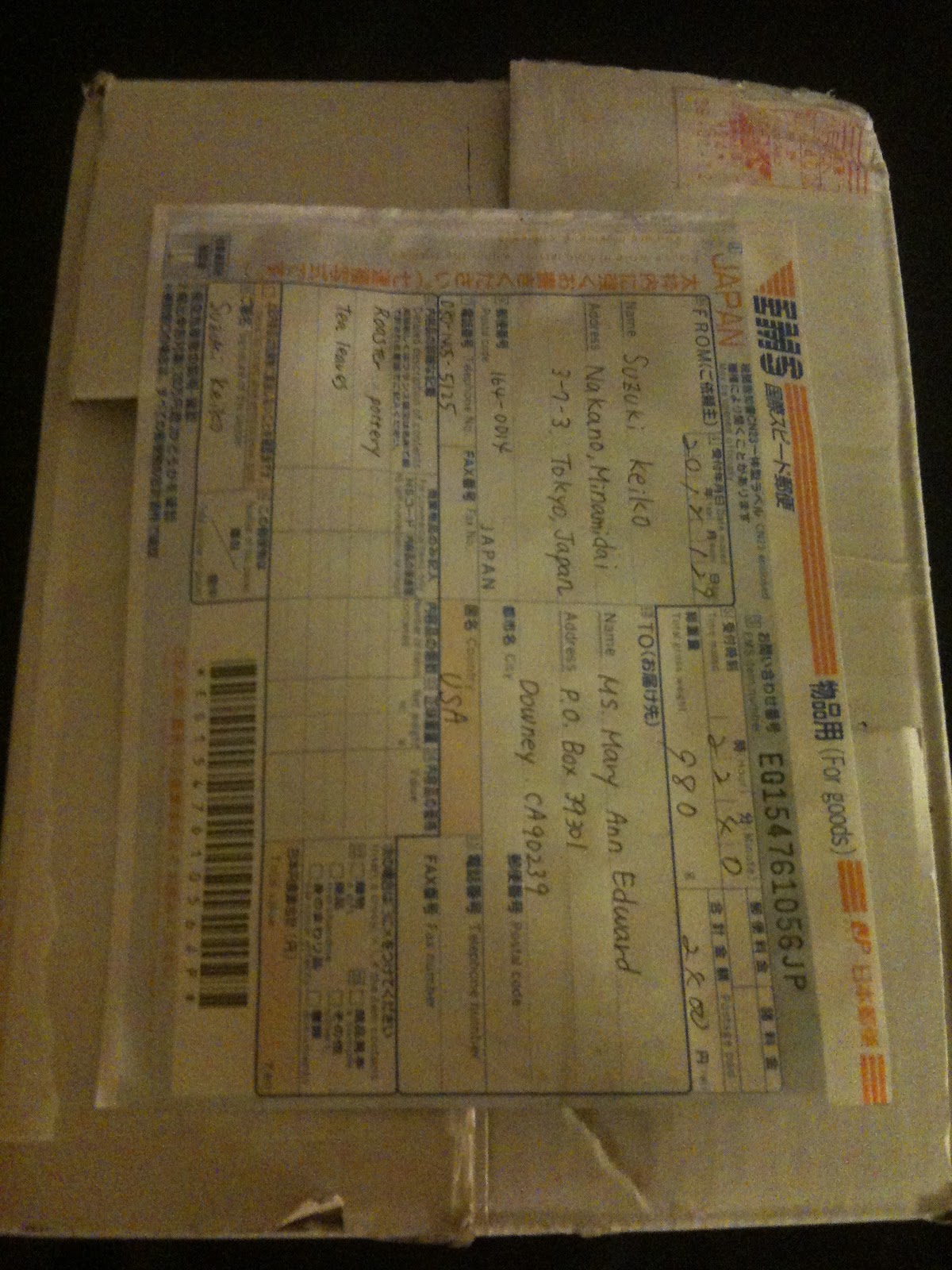
This was a gift from Keiko-san. She sent it to me via the mail. Be advised that the roaster is very fragile.
This particular roaster is hand-made of porous, unglazed clay from Lake Biwa in the Shiga Prefecture, Japan.
![]() |
| Lake Biwa |
The clay from Lake Biwa is rich in iron oxide and has far-infrared effects. The roaster enriches itself from frequent uses and will patina with time. It is a tool primarily used to roast tea. Kuki-cha is roasted to make Houji-cha.
Kuki-cha is a twig tea (bo -cha) that is obtained green so that it can be roasted on a per use basis. Houji-cha is usually a roasted Japanese green tea.
![]() |
| Kuki-cha |
![]() |
| Houji-cha |
![]() |
| Brewed cup of Houji-cha |
Cautionary Handling
- Handle with care as the clay is porous and fragile
- Do not wash the roaster with soap or any detergent
- You may rinse it with water but dry it thoroughly - AIR DRY OVERNIGHT
- Again the clay is porous so do not soak it in water as it will absorb the water and WILL need to dry out completely
- DO NOT USE a damp or wet roaster over the fire/flame - IT WILL BREAK. Air dry it thoroughly before use.
- The handle gets hot so be careful - have an extra pot-holder on hand to prevent any accidents
- DO NOT IMMERSE THE HOT ROASTER INTO WATER - IT WILL BREAK!
- Allow the roaster to cool down completely before storing it away.
- The Houroku is fragile - so store it away in it's own shelf or drawer.
- Do not store it with food items like spices or dried seafood or any item that has a fragrance - like incense or potpourri - the clay will absorb the scent. best to use it for tea only.
How to use the Houroku
- Over a flame or hot coals, warm the roaster for about 3 minutes
- Turn the flame down and add the tea leaves into the roaster
- Roast the leaves over the flame until slightly smokey and fragrant
- Turn the flame off and continue the roasting with the residual heat from the roaster
- Pour the tea leaves through the handle onto a surface or directly into the teapot
According to Keiko-san, the brewed tea leaves will expand and can be eaten.
Thursday, February 2, 2012
Gifts from a fellow tea lover in Japan
This was a lovely surprise from a fellow tea blogger in Japan - Ms. Keiko Suzuki of But Tea.
| But Tea |
I saw her clay hand held roaster on her blog and inquired about acquiring one.
The store - Ochauke-ya (http://ochaukeya.com/houroku) where she purchased it at is in Japan.
However, the store does not deliver overseas, so Keiko-san, gifted me a roaster.
I received her package yesterday and was quite surprised to find some other precious goodies in it.
Kuki-Cha - these leaves to be roasted in the Houroku (roaster)
Houji -Cha (roasted tea) - from Kaga, Ishikawa
Japanese black tea from Kagoshima, Japan
Japanese black tea from Nara, Japan
The Roaster - Houroku
Japanese sweets - Candied Ginger
Thank you to Keiko-san for her kindness, generosity and thoughtfulness.
Wednesday, February 1, 2012
Recipe: Tea Eggs
Ingredients:
12 eggs, at room temperature
1 cup pu-er tea leaves
4 star whole anise seeds
1 cup dark soy sauce
1 teaspoon salt
1 piece ginseng root (optional)
Preparation:
1. Put eggs in a small saucepan and cover them with cold water. Heat to the boiling point then reduce the heat and simmer for eight minutes. Remove from the water and cool in ice cold water.
2. Roll the cooled eggs lightly so that the shells crack but do not break or fall off.
3. Bring half pot of cold water to the boil and add the rest of the ingredients and simmer this for twenty minutes. Remove from the heat and put the eggs into the very hot liquid. Allow the liquid to cool, then refrigerate for a day or two. Then peel and serve.
12 eggs, at room temperature
1 cup pu-er tea leaves
4 star whole anise seeds
1 cup dark soy sauce
1 teaspoon salt
1 piece ginseng root (optional)
Preparation:
1. Put eggs in a small saucepan and cover them with cold water. Heat to the boiling point then reduce the heat and simmer for eight minutes. Remove from the water and cool in ice cold water.
2. Roll the cooled eggs lightly so that the shells crack but do not break or fall off.
3. Bring half pot of cold water to the boil and add the rest of the ingredients and simmer this for twenty minutes. Remove from the heat and put the eggs into the very hot liquid. Allow the liquid to cool, then refrigerate for a day or two. Then peel and serve.
By Explore Cultural China
The Magic Tea Kettle - A Japanese Fairytale
There was once a priest who was very fond of drinking tea. He always made the tea himself and was very fussy about the utensils he used. One day in an old secondhand shop he discovered a beautiful iron kettle used for boiling water for making tea. It was a very old and rusty kettle, but he could see its beauty beneath the rust. So he bought it and took it back to his temple. He polished the kettle until all the rust was gone, and then he called his three young pupils, who lived in the temple.
"Just look what a fine kettle I bought today," he said to them. "Now I'll boil some water in it and make us all some delicious tea."
So he put the kettle over a charcoal fire in a brazier, and they all sat around waiting for the water to boil. The kettle started getting hotter and hotter, and suddenly a very strange thing happened: the kettle grew the head of a badger, and a bushy badger tail, and four little badger feet.
"Ouch! it's hot!" cried the kettle. "I'm burning, I'm burning!" And with those words the kettle jumped off the fire and began running around the room on its little badger feet.
The old priest was very surprised, but he didn't want to lose his kettle. "Quick! quick!" he said to his pupils, "don't let it get away. Catch it!"
One boy grabbed a broom; another, a pair of fire tongs; and the third, a dipper. And away the three of them went, chasing after the kettle. When they finally caught it, the badger's head and the bushy tail with the four little badger feet disappeared and it was just an ordinary kettle again.
"This is most strange," said the priest. "It must be a bewitched teakettle. Now, we don't want anything like that around the temple. We must get rid of it."
Just then a junkman came by the temple. So the priest took the kettle out to him and said: "Here's an old iron kettle I'll sell it to you for very cheap, Mr. Junkman. Just give me whatever you think it's worth."
The junkman weighed the kettle on his hand scales and then he bought it from the priest for a very small price. He went home whistling, pleased at having found such a bargain.
That night the junkman went to sleep and all the house was very quiet. Suddenly a voice called: "Mr. Junkman. Oh, Mr. Junkman!"
The junkman opened his eyes. "Who's that calling me?" he said, lighting a candle.
And there he saw the kettle, standing by his pillow, with the badger head, and the bushy badger tail, and the four little badger feet. The junkman was very surprised and said, "Aren't you the kettle I bought from the priest today?"
"Yes, that's me," said the kettle. "But I'm not an ordinary kettle. I'm really a badger in disguise and my name is Bumbuku, which means Good Luck. That mean old priest put me over a fire and burned me, so I ran away from him. But if you'll treat me kindly and feed me well and never put me over a fire, I'll stay with you and help you make your fortune."
"Why, this is very strange," said the junkman. "How can you help me make my fortune?"
"I can do all sorts of wonderful tricks," said the kettle, waving his bushy badger tail. "So all you have to do is put me in a show and sell tickets to the people who want to see me do my tricks."
The junkman thought this was a splendid idea. The very next day he built a little theater out in his yard, and put up a big sign which said: "Bumbuku, The Magic Teakettle of Good Luck, and His Extraordinary Tricks."
Every day more and more people came to see Bumbuku. The junkman would sell tickets out front and then when the theater was full he'd go inside and start beating a drum. Bumbuku would come out and dance and do all sorts of acrobatics. But the trick that pleased people most of all was when Bumbuku would walk across a tight rope, carrying a paper parasol in one hand and a fan in the other. The people thought this most wonderful. They would cheer and cheer for Bumbuku. And after every show the junkman would give Bumbuku some delicious rice-cakes to eat.
The junkman sold so many tickets that he finally became extremely rich. One day he said to Bumbuku: "You must get very tired doing these tricks every day. I now have all the money I need. So why don't I take you back to the temple, where you can live very quietly?
"Well," said Bumbuku, "I am getting a little tired and I would like to live quietly in a temple. But that old priest might put me on the fire again, and he might never give me delicious rice-cakes."
"Just leave everything to me," the junkman said.
So the next morning the junkman took Bumbuku and a large amount of money and some of Bumbuku's favorite rice-cakes to the temple.
When they got to the temple the junkman explained to the priest everything that had happened, and he gave all the money to the priest for the temple. Then he said: "So will you please let Bumbuku live here quietly forever, always feeding him rice-cakes like these I've brought and never putting him over the fire?"
"Indeed I will," said the priest. "He shall have the honored place in the temple's treasure house. It's really a magic kettle of good luck, and I would never have put it over the fire if only I'd known."
So the priest called his pupils. They put the kettle on a wooden stand, and the rice-cakes on another stand. Then with the priest carrying one stand, and the junkman carrying the other, and the three pupils following after, they carried Bumbuku carefully to the treasure house, and put the rice-cakes beside him.
It is said that Bumbuku is still there in the treasure house of the temple today, where he is very happy. They still give him delicious rice-cakes to eat every day and never, never put him over a fire. He is peaceful. He is happy.
Courtesy of BUT TEA http://www.blogger.com/profile/07772813824069306876
Subscribe to:
Comments (Atom)
Winter is Coming - Ginger Tisane
The warmth of summer is slowly fleeing as the September nights and mornings hint at the coming of winter. Ginger tisanes are perfect to pr...
-
This is a traditional tisanes of the Hui and Dong Xiang people (descendants of the Monggols who converted to Islam in the 13th century)...
-
Waste water bowls are called Shui Fang or Cha Yu - water bowls. They are receptacles for used tea leaves, water and used tea brews, particul...


