Showing posts sorted by relevance for query Ginger tea. Sort by date Show all posts

Monday, April 30, 2012

Varieties of Tisanes


Anise tea, made from either the seeds or the leaves.
Asiatic penny-wort leaf, in Southeast Asia
Artichoke tea.
Bee Balm
Boldo, used in South America
Cannabis tea, used in the preparation of Bhang
Caraway tea, made from the seeds
Catnip tea is used as a relaxant, sedative, and to calm
Chamomile tea is used as a sedative
Che Dang, very bitter tea made from Ilex causue leaves
Chinese knot-weed tea
Chrysanthemum tea, made from dried flowers, is popular with Chinese Dim sum


Cinnamon
Coffee tea leaves and coffee cherry tea are herbal teas made using the leaves and cherries of the coffee plant; in coffee the coffee beans (seeds) are instead used.
Cerasse, a bitter Jamaican herb

Dried chamomile blossoms with bits of dried apple and cinnamon, to be used for tea
Citrus peel, including bergamot, lemon and orange peel
Dandelion coffee
Dill tea, often consumed to ease upset stomach
Echinacea tea
Elderberry
European Mistletoe (Viscum album), (steep in cold water for 2–6 hours)
Essiac tea, a blended herbal tea
Fennel
Gentian
Ginger root can be made into an herbal tea, known in the Philippines as salabat


Ginseng tea is a stimulant and can be used as a coffee substitute.
Ginseng, a popular tea in China and Korea
Goji, a popular and very simple to prepare tea
Hawthorn
Hibiscus (often blended with rose hip), a popular tea alternative in the Middle East which is drunk hot or cold. Hibiscus tea is also consumed in Okinawa, where the natives associate Hibiscus tea with longevity.
Ho Yan Hor Herbal Tea, a herbal tea recipe formulated by Malaysian Chinese
Honeybush is related to rooibos and grows in a similar area of South Africa, but tastes slightly sweeter
Horehound
Houttuynia
Hydrangea tea, dried leaves of hydrangeas; considerable care must be taken because most species contain a toxin. The "safe" hydrangeas belong to the Hydrangea serrata Amacha ("sweet tea") Cultivar Group.


Jiaogulan, (also known as xiancao or poor man's ginseng)

Kapor tea, dried leaves of fireweed

Kava root, from the South Pacific, is popular for its effects in promoting talkativeness and relaxation

Kratom, dried leaves of the Kratom tree, drank for its medicinal and stimulant effects

Ku Ding tea, a bitter tisane found in Chinese herbal medicine

Kuzuyu, is a thick white Japanese tea made by adding arrowroot powder to hot water


Labrador tea, made from the shrub by the same name, found in the northern part of North America.
Lapacho (also known as Taheebo) is the inner-lining of the bark (or cambium) of the Red or Purple Lapacho Tree which grows in the Brazilian jungles. It is boiled to make an infusion with many and varied health benefits.

Lemon Balm
Lemon and ginger tea
Lemon grass
Luo han guo
Licorice root


Lime blossom, dried flowers of lime tree (Tilia in Latin).

Mate (or yerba mate) is a shrub grown mainly Argentina, Uruguay and Brazil from which a caffeinated, tea-like brew is prepared.

Mate de coca (sometimes called "coca tea"), made from coca leaves. Authentic mate de coca contains very small amounts of cocaine and similar alkaloids. In some countries where coca is illegal, products marketed as "coca tea" are supposed to be decocainized, i.e., the pharmacologically active components have been removed from the leaf using the same chemicals used in manufacturing cocaine.


Mint, especially peppermint (also mixed with green tea to make mint tea)

Mountain Tea, a very popular tea in the Balkans and other areas of the Mediterranean region. Made from a variety of the Sideritis syriaca plant which grows in warm climates above 3,000 feet. Records of its use date back 2,000 years.


Neem leaf
Nettle leaf
Noni tea
Oksusu cha (옥수수 차), traditional roasted corn tea found in Korea.
Pennyroyal leaf, an abortifacient
Pine tea, or tallstrunt, made from needles of pine trees is high in vitamins A and C
Qishr, Yemeni drink with coffee husks and ginger.
Red clover tea
Red raspberry leaf


Roasted barley tea, known in Japanese as mugicha and Korean as bori cha. The roasted flavor can be reminiscent of coffee (without coffee's bitterness and caffeine). It is often drunk cold in the summer.

Roasted wheat is used in Postum, a coffee substitute.

Rooibos (Red Bush) is a reddish plant used to make an infusion and grown in South Africa. In the US it is sometimes called red tea. It has many of the antioxidant benefits of green tea, but because it does not come from tea leaves, it has no caffeine.

Rose hip (often blended with hibiscus)

Roselle petals (species of Hibiscus; aka Bissap, Dah, etc.), consumed in the Sahel and elsewhere.
Rosemary


Sagebrush, California Sagebrush
Sage
Sakurayu is a Japanese herbal tea made with pickled cherry blossom petals.
Salvia
Sassafras roots were steeped to make tea and were used in the flavoring of root beer until being banned by the FDA.
Scorched rice, known as hyeonmi cha in Korea
Skullcap
Serendib (tea), a tea from Sri Lanka


Sobacha
Spicebush (Lindera benzoin) leaves used to make a tea by some native peoples of eastern North America
Spruce tea, made from needles of spruce trees is high in vitamin C
Staghorn sumac fruit can made into a lemonade.
Stevia can be used to make herbal tea, or as a sweetener in other tisanes.
St. John's Wort can be used as a herbal anti-depressant.
Thyme Antiseptic, used in lysterine.
Tulsi, or Holy Basil, in English
Uncaria tomentosa, commonly known as Cat's Claw
Valerian Sedative.
Verbena (Vervains)


Vetiver
Wax gourd in East Asia and Southeast Asia.
Wong Lo Kat, a herbal tea recipe from Canton, China since Ching Dynasty
Woodruff
Yarrow
Yerba Mate Popular in South America. Scientific name Ilex paraguariensis.

Friday, May 3, 2013

Masala Chai


Masala chai Hindi - मसाला चाय literally  means mixed-spice tea.
It is a flavored beverage, achieved by brewing black tea, milk, butter/ghee and a blend of spices and herbs that are indigenous to India.
This particular style of tea originates in South Asia.
A true masala chai is decocted rather than steeped or brewed.
Most of the masala chai served up in coffee and tea houses are not true masala chai.

Chai means tea in the Hindi language.
Masala  मसाला means a mixture of spices and herbs. 
Spices of herbs can be a mixture of cardamom, ginger, 
cinnamon, star anise, cloves, bay leaves, etc.
Masala chai is used as a form of medicine in Ayurveda.
Ayurveda is the ancient 5000 year old medical science of India that is still used to treat diseases and manage health.
In the Ayurvedic medical text chai is referred to as the method and ingredients that are used to make the beverage.
 The herbs and spices are boiled with tea in either milk or a mixture of milk and water, either sweetened or unsweetened.


The recipes vary in accordance to the constitution of the individual.
 The spices used are usually a potent blend and has a myriad medicinal and health promoting benefits.
Chai is traditionally used to increase the digestive fire, sooth and relax the digestive tract, increase the waste removal as well as toxin excretion, elevate metabolism and decrease appetite.

 The main ingredient being tea from the Camellia assamica.
It is processed into a black tea.
The tea and the combination of spices that give the beverage an excellent source of anti-oxidants, flavors and healing properties.
 The result is a delicious, piquant, and often times dark brew.


The basics to the method to chai decoction is the tea.
A strong black tea such as an Assam tea that is processed into 'mamri' is used.
Mamri are granules of tea versus leaves or cuts of leaves.
Mamri means neat and grainy in appearance.
Mamri tea, also known as CTC -cut, torn & curl, is a blend of high grown black tea commonly used in Kenya and India.  
A distinct variety that offers bright, full bodied liqueur.

It has a full body to the brew and especially great for making chai.
It is cured in a special way that yields itself into granules.
It is an inexpensive tea and most popular among the Chai wallahs in India.


There is no fixed recipe or preparation method for masala chai.
Many have their own special versions of the tea.
However, all masala chai has four basic components:
  • Tea - the basic tea is usually a strong black tea, such as Assam. The various spices and sweeteners do not overpower this varietal. The varietal should have a strong aromatic scent with dominant tobacco and floral notes.
  •  Sweetener - white sugar is usually used. However, in India, a form of unrefined cane sugar called Jaggery or gur is commonly used. The sugar is a concentrated product of cane juice without separation of the molasses and crystals. They can vary from golden brown to dark brown in color. 
  •  Milk - whole milk or non-dairy milk - soy, rice will do. Condensed milk may be used  which also doubles as the sweetener. 
  •  Spices - The traditional masala chai has a bracing, strongly spiced flavored brewed with spices. Masala chai incorporates one or more of the following: cardamom, cinnamon, ginger, star anise, peppercorn, and cloves.
Methods of tea preparation can vary widely however this is the common preparation techniques include:

Boiling tea dust in water over an open fire
Add cow's milk or buffalo's milk or milk powder to the boiling tea
Mix in plenty of raw sugar
Chop or smash the fresh ginger root
Grind cardamom pods
Grind the other masala (spices) such as cinnamon and cloves
Tear fresh herb leaves, such as lemongrass and mint
Boil spices and/or herbs with the tea
Strain the tea leaves and spices


The recipe for chai typically varies by region.
  • New Delhi - black tea with fresh ginger root, milk and sugar
  • Mumbai / Bombay - thick, strong, milky black tea boiled with cardamom seed and sugar, served in half-size servings called "cuttings"
  • Kerala - "metre chai" made from milk, sugar and black tea and poured back and forth between two cups until foamy and bubbly
  • Ladakh - pu-erh tea made with milk and salt, no sugar
  • Gujarat - mixed spice black tea with milk, served from a shallow bowl rather than a glass or mug, and sometimes garnished with a sprig of mint
  • Fort Cochin / Kochi - mixed spice tea with a bit of black pepper
  • Tamil Nadu - sweet, strong milk tea prepared with a filter akin to a coffee filter; sometimes spiced
  • Hyderabad - so-called "Sulemani chai", a drink made of sweet black tea with lemon
  • Bhopal - black tea made with milk and salt, no sugar


Saturday, May 15, 2010

Scented Teas

Sometimes also called flower scented teas.

The base of the tea will range from any of the previous 7 classifications of tea.
It is then scented with flowers - jasmine, rose,
osmanthus or milk or pine needles or fruits.
It adds higher floral notes to the existing tea.
These teas are excellent with pungent or spicy food.

Scented teas are about blending teas.
The goal of blending teas is to fuse together varietals to create flavors, to ensure variation and compensation in quality that occurs in the tea seasons.
This will ensure a well balanced flavor and consistency in quality.

Generally tea can easily absorb any aroma.
 As a consequence problems arise when tea is transported and handled; it can easily be contaminated but can also be corrected or compensated for in quality and flavor by scenting.
The process of blending is usually done in large drums with essential oils, flavorants or perfumes.
Most tea purists think that scented tea is sub-standard tea however that can be an incorrect notion.
There is numerous scented teas that yield a beautiful aroma and pleasing flavor when it is scented traditionally with flowers, herbs, spices and some are even smoked.

Artificially flavored tea is distinctive in their aroma.
When first inhaled the scent will cloud the mind and create congestion in the frontal part of the head.
This is usually because the tea has been scented with chemicals rather than natural infusion of flowers or herbs.
 Most teas that are scented with fruits are produced by this artificial means.

The demystification of scented teas are easily understood when teas are favored in their blending with original scent materials like flowers, herbs, spices and pure food grade essential oils.

Some of the more common scented teas are scented with flowers, herbs and essential oils are as follows:

1. Jasmine – Commonly called Pearl Jasmine, the leaves are usually the fine green buds of the tea plant that are oxidized with Jasmine flowers. The flavor is usually light. The tea is rolled tightly. This is the most popular scented tea in China particularly in the north.


2. Sweet Osmanthus – Osmanthus Fragrans – Gui Hua, the flowers are used to infuse green teas, puers or even black teas. The teas are usually oxidized with the flowers for the scenting to occur. The second most popular tea in China.

3. Rose – This is achieved by oxidizing the tea with the rose buds. Usually black tea are used and called Rose Congou.

4. Chrysanthemum – This is usually done with puer tea. The flowers are added when the puer is being brewed. There is no oxidizing. Usually added in by the tea connoisseur.

5. Vietnam Lotus Tea – the tea is infused by stuffing the tea leaves into the blossom of the lotus flower – Nelumbo Nucifera and left overnight to absorb the scents and essential oils of the flower. Sometimes the tea is either jarred or oxidized with the stamens of the lotus blossom. This matter is usually requires multiple times of infusion. It is a very prized tea in Vietnam and is rare to come by. A favorite among Buddhist monks.


6. Smoked Teas – This tea is achieved when black tea is dried over smoking pine needles creating Lapsang Souchong.


7. Earl Grey – blend is created with black tea and bergamot essential oil – from the citrus family.

8. Herbs – usually green teas are mixed with mint or bay leaf. A popular style in North Africa and the Middle East.


9. Spices – ginger, cardamoms, cinnamon, clove, black pepper, anise, mace are usually added into black tea to create Marsala Chai. A popular style of tea in India, Sri Lanka, Nepal, Pakistan and parts of the Middle East.

10. Grains – usually done with roasted rice, wheat or barley. Popular in the Korean and Japanese tea culture.


Monday, January 23, 2012

Tea - tracing its flavorful journey - Part Two


In Dali, 'three-course-tea' is still enjoyed. 
It became popular at court during the Nanzhao Kingdom. 
That tea is made with the best well water and served with walnuts, honey, and ginger. That is one of the sweet sides of tea. 
Another side is the anger expressed over tea taxes.
 These were collected during years of the Qing Dynasty when, annually and as tribute, more that thirty thousand kilograms of Pu-er tea was delivered to the Imperial Court.
An article about some tea history and inroads in Europe and England, appeared in Flavor and Fortune's Volume 2(4) on pages 9, 22, and 23. 
That article included a recipe for Tibetan Tea called Boeja.
 It discussed processing of the leaves and how the Dong, Miao, Tibetans, and Uygur minority populations in China use tea. 
It also suggested books to learn about this beloved beverage including Imperial Master Lu Yu's first extensive treatise on tea.
It did not mention that the Sichuan-Tibet and Qinghai-Tibet highways, ships and the airways were thoroughfares replacing the ancient tea caravan routes, and that the Karakoram highway is but a dozen years old.
 It did not say that in 641 CE, Princess Wen Cheng married a Tibetan king and brought tea and tree seeds to Tibet. 
That small gesture reduced the arduous half-year journey from China's Eastern tea gardens spreading plantings of tea more widely.

 In 1951, other tea seeds and tiny tea tree saplings were shipped to many other new mountainous locations in China. 
With easier access, anyone can travel this route that endied in Xian and was used for more than a thousand years. 
It did not say that anyone can now bring things in and spread new ideas and new things.

Since circa 2737 BCE, when Emperor Shen Nung drank hot water with leaves from an evergreen that fell into it, tea now known as Camellia sinensis, has been consumed in China. 
It has been about five thousand years since the Emperor found this hot water to be sweet, bitter, fragrant, stimulating, and very tasty.

Called ming in ancient times, the leaves of the tea plant have been prescribed for preventing and curing many an illness. 
The Emperor knew tea as a stimulant and we know that the caffeine and theobromine in it increases the activity of digestive juices. 
We also know that tea's tannins strengthen capillaries and stimulate the adrenal gland; and we know that the esters in it are touted, in China, to prevent radioactive injuries. There is a small but valuable amount of manganese, selenium, and fluorine in tea along with many polyphenols.

Thursday, April 8, 2010

Keeping tea fresh

Enemies of tea

Air, light, temperature fluctuations and moisture are the enemies of tea.
When properly stored, tea leaves will mellow and enhance their aroma and flavor.
Improper storage will affect the quality, flavor and aroma of tea.
Tea can last up to a year or more when it is vaccuum sealed.


Best way

The best way to keep tea fresh is in a vaccuum sealed container.
The goal is to retain their original color, aroma, flavor and shape consistently until all the tea is used up.
The following are some good habits to practice in storing tea:

• Use clay, porcelain, glass, pewter or metal canisters with 2 airtight lids.
• Use foil bags or zip lock bags with the air let out of them.
• Use a vaccuum sealer before putting it in a canister.
• Use small to medium size canisters, as when the canisters are not full,
the air in the vacant spaces will effect the tea leaves.
• Pu errh teas are best kept in clay jars with a loose lid or a ginger jar.
• See Pu Errh storage.
• Keep the canisters in a cool and even temperatured area.


Avoid the following


1. Do not expose tea leaves to air. Prolonged exposure leads to oxidization and affects the tea leaves and will therefore affect the quality, flavor and aroma of tea.
2. Do not allow the tea leaves to absorb moisture.
3. Avoid the exposure of tea leaves to sunlight.
4. Avoid temperature fluctuations.
5. Avoid cross-contamination in storage. Do not store tea with other food item.
6. Do not use your hands to handle tealeaves. Use a tea scoop.


Saturday, July 7, 2012

How to make an herbal tisanes


Suffering from a cold? A herbal tisanes can be the perfect, natural substitute for taking pills and cough medicine. Want to relax after a long day? Herbal tisanes are also good at helping one relax or sleep. Herbal tisanes are wonderful at anytime of the day, but they can be a bit tricky.
They are also good for people on de-tox diets. They can be a good substitute for coffee.

Steps
Know the reason for which you need the tisanes. There are many herbal tisanes selections to try.

1. Relaxing - if you are trying to get some rest, look for a tisanes with chamomile as the main ingredient.
2. Uplifting - lavender, thyme, and spearmint are also good things to look for in a blend.
3. Soothing - if you are trying to soothe a cold you'll want something with eucalyptus, ginger, cinnamon, and/or licorice root.
4. Determine how much tisanes you will be making. The least you should ever heat up in a kettle is two cups. Any less then that, and you run the risk of boiling your kettle boil dry. Put the kettle on the stove (or plug in the electric kettle) and bring the water to boiling.
5. Gently warm your tea cups and teapot by running the tap water as hot as possible and fill teapot & tea cup(s) with the water. Put lids on each to keep in the heat. By heating up the cups and pot, your tisanes will keep warmer longer, and you lessen the risk of having a tea cup or top shatter.
6. Add the herbal tisanes. When the water has come to a rolling boil, empty the teapot of warm water and add the leaves/flowers or tea bags. The general rule when making a pot of tea is to add a teaspoon of leaves (or a tea bag) for each cup and one for the pot. If only making tea for one in a cup or mug, then add the bag or leaves to the mug and pour the boiling water over them.
7. Steep at least 5 minutes. While steeping too long can bring out the bitter tannins in black, green, or white teas, herbal teas are different. They generally don't have many tannins and therefore can be steeped anywhere from 5 to 10 minutes. Use extra tea leaves to make a stronger tea;not a longer steeping time.
8. Strain if needed. If you have used loose tea leaves, and don't like leaves floating in your tea, then pour hot tea through the strainer into each cup.
9. Sweeten to taste. Sugar or honey may be used to taste. However, some herbal teas are naturally sweet. One should taste each tisanes by itself first before deciding if milk and honey are needed.
By Explore Cultural China

Sunday, September 19, 2021

Winter is Coming - Ginger Tisane

 The warmth of summer is slowly fleeing as the September nights and mornings hint at the coming of winter. Ginger tisanes are perfect to prep the body and mind for the transition. If you are in a hurry these ginger granuales are excellent to have on hand when you need a quick warmth.


This is a natural blend of ginger in honey and crystalized. One teaspoonful in about 6 oz of hot boiling water does the trick and if you wish it to be less sweet add less granules or more water to one teaspoon of ginger honey granules.

These ginger granules are also excellent for the office when you are battling the cold air blowing down from the air conditioning and most handy to have on hand when traveling or for sudden onset of  digestive issues, chills, stiffness, fatigue, abdominal pains, diarrhea, loss of appetite, and to prevent weakness and inflammation. It enhances appetite, improves digestion and regulates elimination. 

Ginger tisanes helps regulate and relieve frequent constipation and fatigue and energizing without taxing your adrenals. It is an excellent morning beverage before any caffeine intake for the day. Ginger tisanes also may relieve symptoms of motion sickness and nausea. 

These granules are also excellent to substitute for sugar and may be added to your favorite tea - English breakfast or even to a green tea on its last brew. These granules may also be added to Pelligrino water for a nice alternative to sodas.


For more on tisanes and alternatives to the caffeine sensitive, see the following article - Varities of Tisanes


Friday, December 19, 2014

Tea Review - The Republic of Tea


In the next three posts we will be reviewing teas from The Republic of Tea.
The following teas were sent by and courtesy of  The Republic of Tea Team.
The tea are of Pumpkin Spice, British Breakfast and Peppermint Bark.


The Pumpkin Spice and Peppermint Bark are scented teas, while the British Breakfast is a blend of black teas.
These are teabags that are packed in brightly labeled and airtight tin cans.
Each can comes with suggestions for brewing with regards to time and temperature and the leeway of personal preferences.
According to the label only sustainable derived ingredients are utilized.
There is also a Caffeine Content indicator on the label.


Peppermint Bark comes in 1.65 oz can that contain 36 teabags. 
This is a blend of organic ingredients - green Rooibos, Peppermint, Cocoa extract, Stevia leaf, vanilla flavors and natural flavor. 
This is a Kosher certified tea, with the USDA Organic and Certified Organic Quality Assurance International stamp of approval.
It also carries the stamp of approvals for Gluten Free, Rainforest Alliance Certified for Rooibos and NON  GMO Project verification.

Pumpkin Spice is a blend  of black tea, ginger, cinnamon, ginger, nutmeg, cloves, allspice, Sweet Blackberry leaves and Pumpkin flavors. 
The can contains 50 teabags with a total weight of 2.8 oz. 
This is a Gluten Free certified tea blend.

British Breakfast blends black teas from Assam, Ceylon, Darjeeling and Africa.
Contains 50 teabags in a can of 2.8oz.
Kosher Certified, Gluten Free and NON  GMO Project verified.

We will be doing a taste tests for each of these teas.

Thursday, February 2, 2012

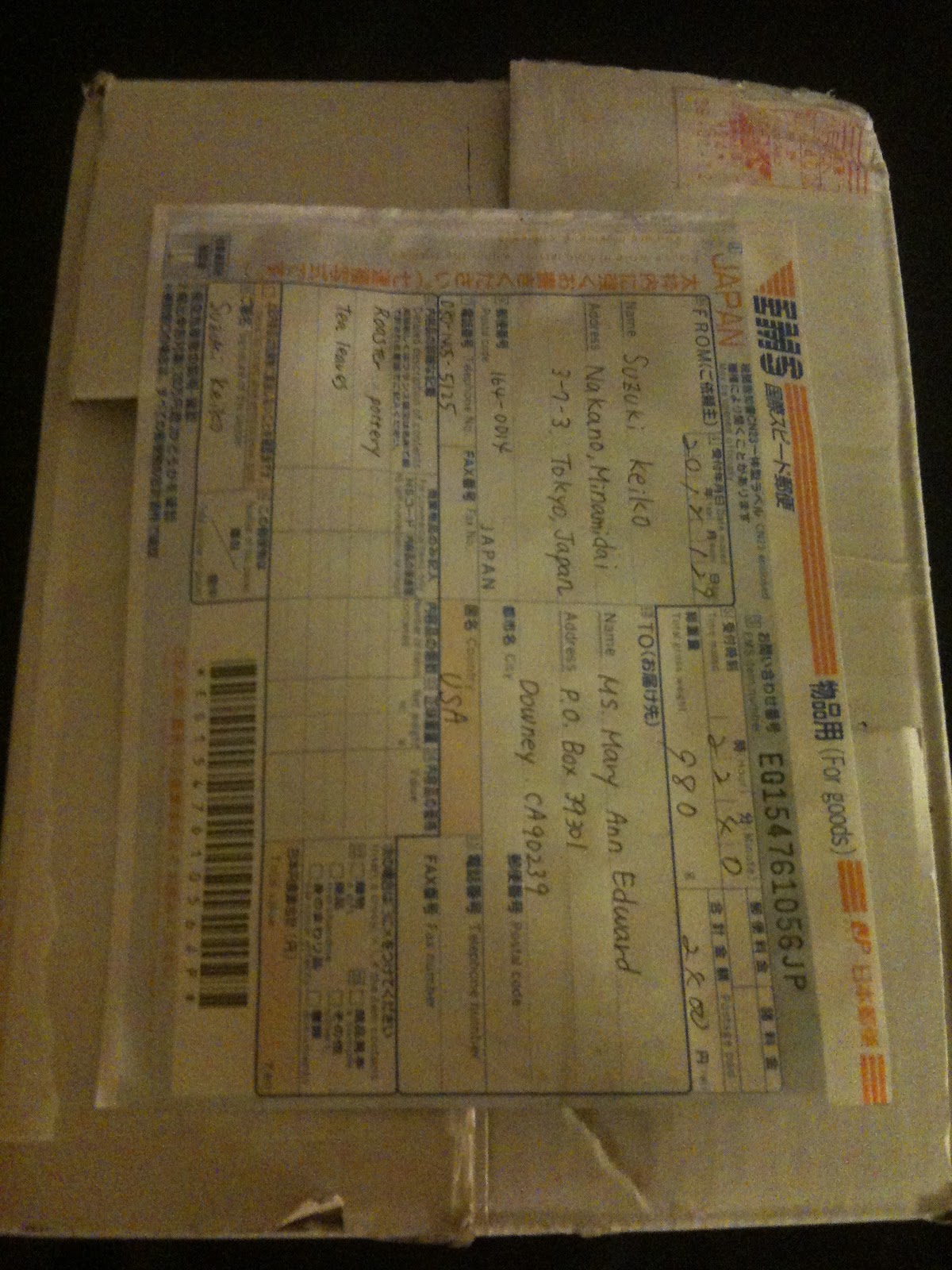
Gifts from a fellow tea lover in Japan

This was a lovely surprise from a fellow tea blogger in Japan - Ms. Keiko Suzuki of But Tea.

But Tea


I saw her clay hand held roaster on her blog and inquired about acquiring one.
The store  - Ochauke-ya  (http://ochaukeya.com/houroku) where she purchased it at is in Japan.
However, the store does not deliver overseas, so Keiko-san, gifted me a roaster.
 I received her package yesterday and was quite surprised to find some other precious goodies in it.

 
Kuki-Cha - these leaves to be roasted in the Houroku (roaster)

Houji -Cha (roasted tea) - from Kaga, Ishikawa

Japanese black tea from Kagoshima, Japan
Japanese black tea from Nara, Japan


She even made a booklet for me in English with beautiful photos.


The Roaster - Houroku

Japanese sweets - Candied Ginger

Thank you to Keiko-san for her kindness, generosity and thoughtfulness.


Winter is Coming - Ginger Tisane

 The warmth of summer is slowly fleeing as the September nights and mornings hint at the coming of winter. Ginger tisanes are perfect to pr...